When We Cease to Understand the World by Benjamín Labatut
Almost always, when I finish a book, I know whether or not I enjoyed it. I cannot say that about Benjamín Labatut's When We Cease to Understand the Word, as translated by Adrian Nathan West. I read this book on a friend's recommendation and can honestly say that I've never read anything like it. Is it a novella? Not really. Novels and novellas have plots. Is it a collection of essays centered around a theme? Again, not really. This book has characters with internal monologues who occasionally interact with each other. Is it a history? Well, the book includes a large number of historical facts but also a large amount of fiction.
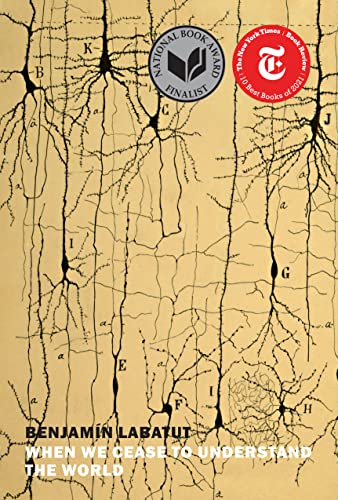
While the jury is still out as to whether I enjoyed this book, others certainly did. Sam Sacks, writing for The Wall Street Journal wrote a very positive review. President Obama also recommended it, even if it was not one of his "favorite books of 2021."
Taken as a whole, Labatut presents a series of stories about scientists (all white men) who struggle with the world-altering repercussions of their work. As these men either fall into depravity or lose their minds or both, we, the audience, see how discovery and advancement are inextricably intertwined with horror and destruction. We see how attempting to know the unknowable yields madness.
It does not feel like Labatut is urging caution in the style of Mary Shelley and all the science fiction writers who followed her. Labatut’s own view is hidden - or is so neutral that it may as well be hidden. Is the point that we should not try to change the world or know the unknowable? Is the point that we must accept horror to advance?
Perhaps presenting these questions without answering them is the whole point of the book.
Tags: BooksSubscribe: RSS/Atom feed for your reader of choice.